The Backyard: JConcepts Reactor Monster Truck — Deep Dive
Happy Friday and welcome to The Backyard!
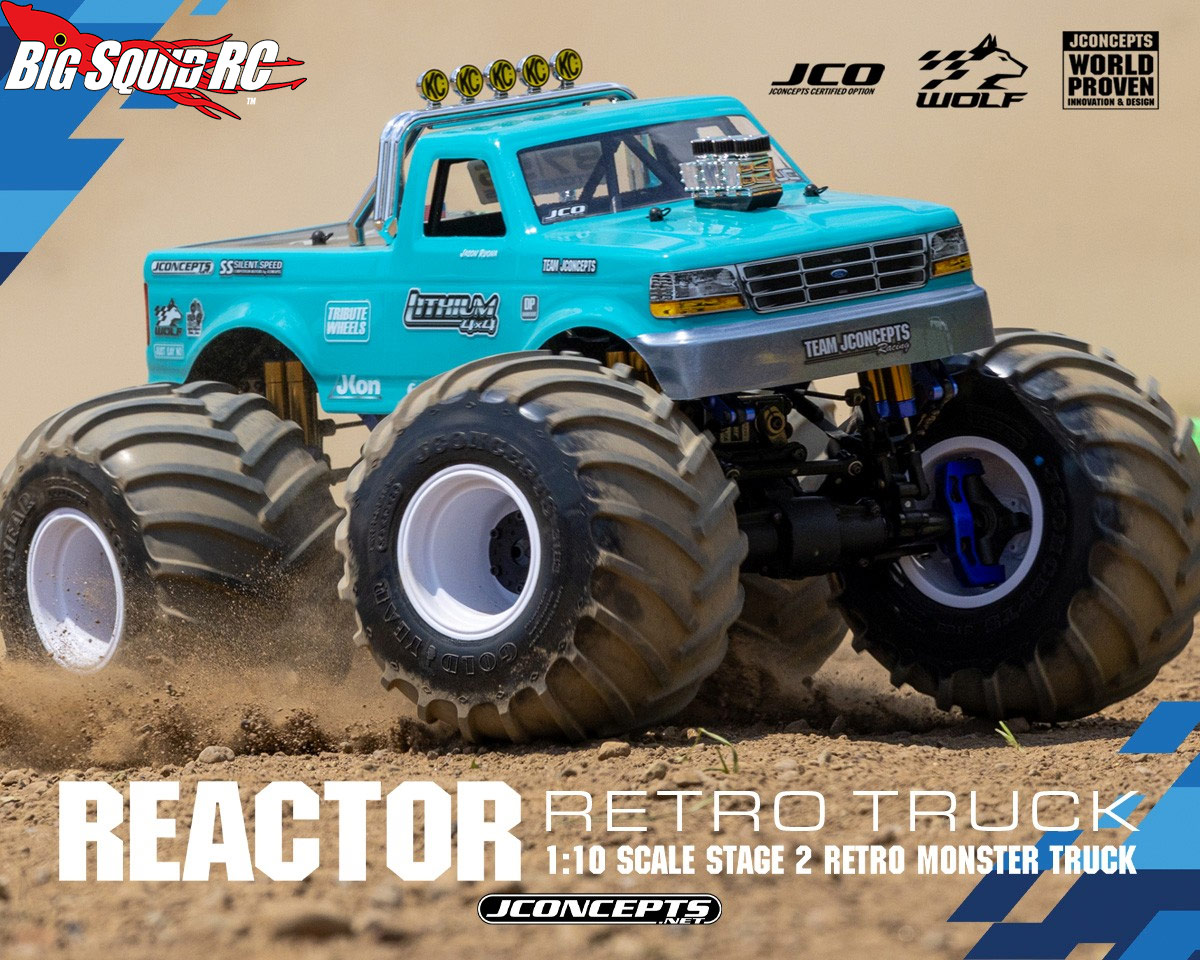
Settle in, all ye monster truck faithful, because this week I want to spend some time talking about one of the most interesting announcements we’ve seen in a while — the newly revealed JConcepts Reactor Retro Stage II Monster Truck.
After years of releasing aftermarket accessories for the solid-axle r/c monster truck world, the folks at JConcepts have gone all-in with a full kit — and one that’s clearly inspired by two very important pieces of monster truck history.
The first influence is obvious: the Tamiya Clod Buster. From the motor-on-axle gearboxes alone, the homage is unmistakable. That said, the comparison mostly ends there. While the Clod’s axles are largely unchanged from their 1987 origins, the Reactor’s axles appear to be light-years ahead in both design and performance.
The Reactor’s gearboxes feature servo-on-axle steering and aggressively angled steering knuckles. While internals details are unknown as of this writing, I’m assuming it has heavy duty gears and built-in pinion adjustability. These are all modern performance features wrapped in a retro-inspired package.
So yes, the Clod is one inspiration. But what’s the second?
That honor goes to one of the most important full-scale monster trucks ever built: BIGFOOT #4. Time to put on our monster truck nerd hats.
BIGFOOT #4 was one of the first true Stage II monster trucks, and arguably the most important. Stage II trucks marked a massive leap forward from the modified street trucks — or Stage I monsters — of the late ’70s and early ’80s. These were purpose-built machines with heavy-duty frames and axles, designed to withstand the punishment of early monster truck racing.
That said, Stage II trucks still ran leaf springs, and their suspensions were relatively stiff. Eventually, they gave way to Stage III monsters — tubular chassis, linked suspension, and long-travel shocks. In other words, the modern monster truck.
BIGFOOT #4 spent its glory years in the ’80’s as a traditional Stage II machine. Most would argue it was THE Stage II machine. The truck started seeing regular modern updates during the tail end of the 80’s, like a fiberglass body. Then, on August 10th 1990, in Nashville, TN, the truck suffered a catastrophic crash. Luckily, driver John Piant was ok, but the same could not be said about ol’ #4.
You can check out footage of that wreck here:
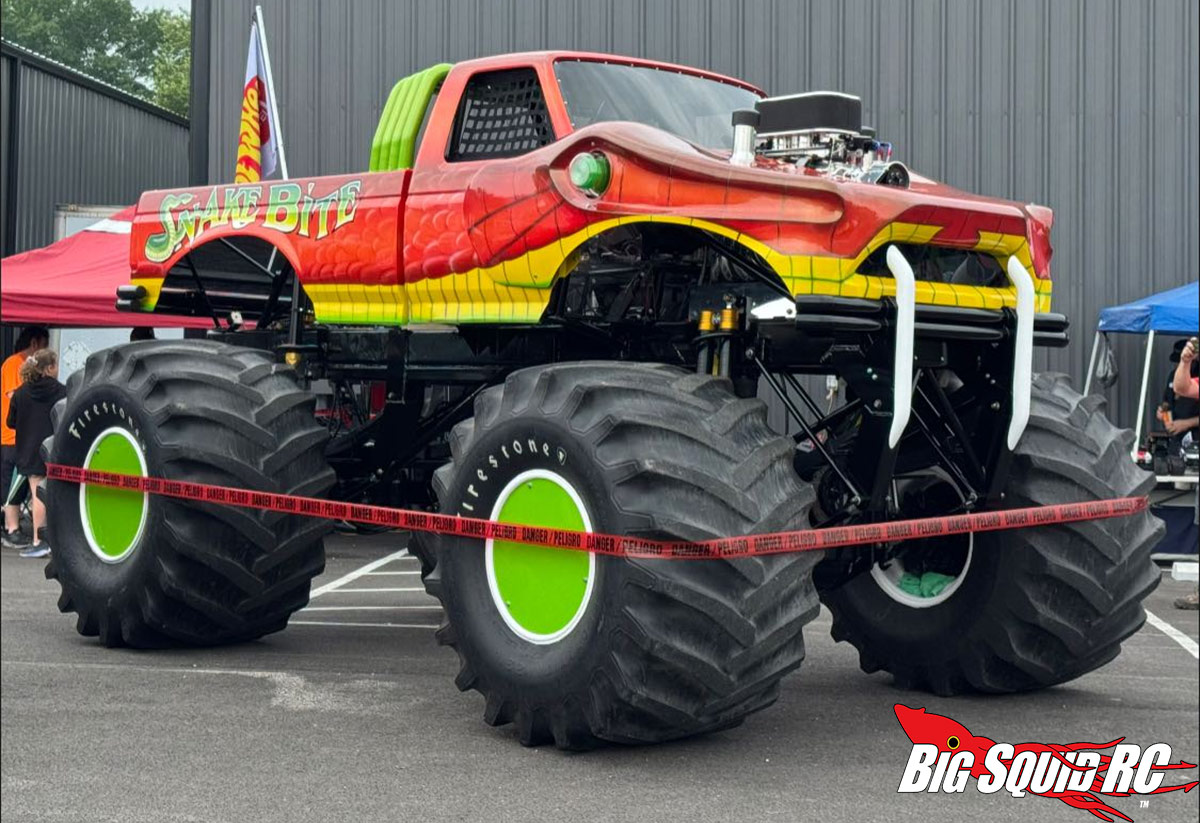
Rather than being scrapped, the truck was rebuilt — but with major suspension changes. The leaf springs remained, but long-travel nitrogen shocks were added. Combined with a new roll cage and fiberglass body, the truck returned to competition reborn under a new name: Snake Bite.
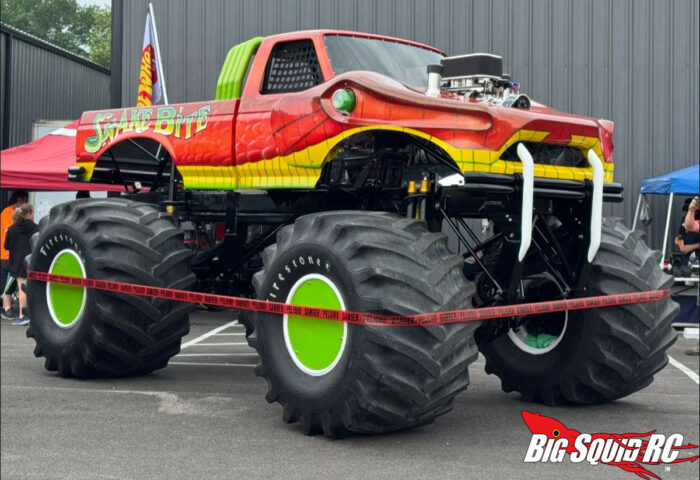
While still heavier and stiffer than emerging Stage III competitors, the updated truck was significantly more agile than before. BIGFOOT #4 remains preserved in this configuration today, though its competitive days ended in the early ’90s — and it’s this specific version of the truck that appears to have directly inspired the Reactor. P.S. if you are interested in a super detailed history of BIGFOOT #4, click here.
So, let’s talk about the Reactor itself.
The suspension uses leaf springs paired with an interesting rod-end shackle setup. When combined with tuned oil-filled shocks, it looks like about as plush a ride as you can realistically get from a leaf-sprung monster truck.
Weight distribution also appears well thought out. The heaviest components — the MOA gearboxes — sit low, and the battery looks to be mounted as low as possible within the chassis cradle. The carbon-fiber chassis keeps weight down, while the faux roll cage up top appears to be molded plastic, minimizing high-mounted mass.
It’s a layout similar to JConcepts’ race-proven Regulator Clod Buster chassis, and judging from the released video, it looks perfectly capable when it comes to both jumping and cornering.
Speaking of handling, there’s one feature that’s sparked a lot of online debate — sway bars. The Reactor includes them, which has caused some hand-wringing within r/c monster truck racing circles, as most retro classes prohibit sway bars.
Folks… relax. They can be disconnected or simply not installed. Problem solved.
As I mentioned earlier, JConcepts hasn’t shared much detail on the internal gearbox design, other than confirming they are fully proprietary and not compatible with Tamiya Clod Buster parts. I’m extremely curious to see what’s inside those housings.
If you can’t tell by now, I’m very excited about this kit. Pricing and ordering details haven’t been announced yet, but I fully plan on getting my name on the preorder list when it opens — and you can expect a much deeper dive once one lands here. I’m looking forward to discussing not just the mechanics, but also where I see this truck landing in the hardcore r/c monster truck racing landscape.
Lastly, a big congratulations to JConcepts on releasing a full monster truck kit. It’s a genuinely cool thing to see, and a bold move for the hobby.
Until next time — Keep it on all four’s.