
The Backyard – Why Some R/C Platforms Just Won’t Die
Happy Friday and welcome to The Backyard!
Every so often in this hobby, someone will pop into a comment section or forum thread and ask a question that seems perfectly reasonable on the surface:
“Why are they still making that?”
It usually comes up when talking about platforms like the Tamiya Clod Buster, the Lunch Box, the Traxxas Stampede, or a handful of other long-running designs that have been around long enough to legally rent a car. These trucks and cars have been on hobby shop shelves for decades, sometimes with only minor updates along the way.
And yet… they keep coming back.
At first glance it can seem strange. R/C technology has advanced a lot over the years. Brushless systems, LiPo batteries, better suspension designs, improved radio gear—it’s not exactly the same hobby it was in the late ’80s or early ’90s. So why do companies keep producing platforms that, on paper, look a little dated?
Well, part of the answer is actually pretty simple: plastic molds are incredibly expensive.
Those injection molds used to produce chassis parts, gearboxes, suspension arms, and all the other bits that make up an R/C kit cost a serious amount of money to design and manufacture. Once a company has invested in those molds, the goal becomes pretty obvious—use them for as long as humanly possible.
If a platform is still selling, and the molds are still usable, there’s very little incentive to reinvent the wheel. From a business perspective, continuing to produce a proven product using tooling that has already paid for itself is just smart.
But that’s only part of the story.
The other part is that some platforms just plain work.
Take something like the Tamiya Lunch Box. Is it the most sophisticated chassis on the planet? Absolutely not. It’s top-heavy, it wheelies constantly, and the suspension is… let’s call it “enthusiastic.” But it’s also incredibly fun. It’s simple to build (that’s a HUGE part of the allure of Tamiya), durable enough for casual bashing, and it has a personality that modern, hyper-refined vehicles sometimes lack.
The same can be said for trucks like the Clod Buster. The motor-on-axle design might not be the most modern layout, but it’s iconic—and it’s still the foundation for an entire segment of the hobby thanks to retro monster truck racing.
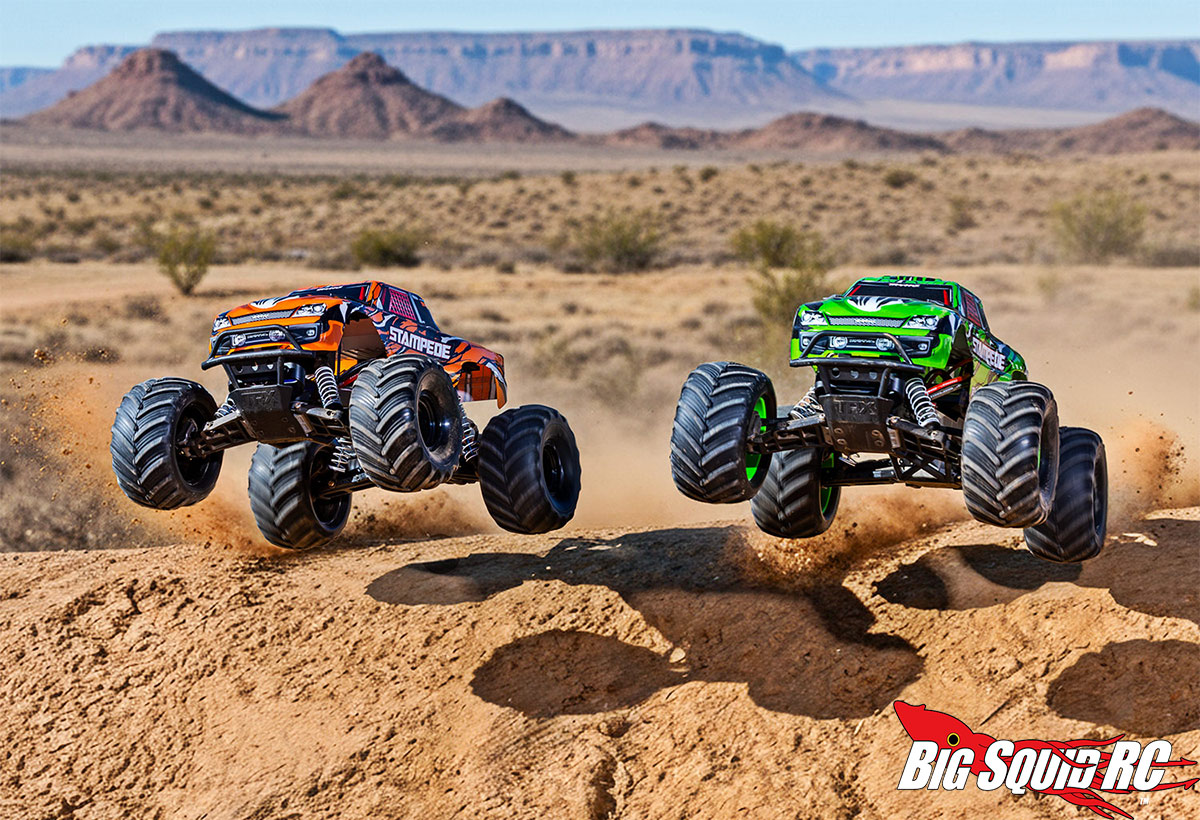
Then there’s the Traxxas Stampede, which has quietly been one of the hobby’s most enduring trucks. It’s simple, tough, easy to drive, and endlessly upgradeable. For someone just getting into R/C, that kind of platform still makes a lot of sense.
A more modern example of this phenomenon is the Axial SCX10. When that chassis hit the scene, it was wildly successful and quickly became the backbone of the scale crawler world. Axial didn’t rush to replace it with an entirely new platform because, frankly, they didn’t need to. Instead, they kept the core architecture intact while updating bodies, accessories, and small details along the way.
It took quite a while before we saw the SCX10 II, and even longer before the SCX10 III arrived. That wasn’t because Axial lacked ideas—it was because the original platform was still selling and still performing well. Updating cosmetics and accessories is far more cost-effective than creating entirely new molds for axles, transmissions, and chassis components. When something works that well, companies understandably ride the wave.
Longevity also brings something else to the table: ecosystems.
When a platform sticks around long enough, the aftermarket explodes. Hop-ups, upgrades, replacement parts, tuning options—you name it. Entire cottage industries can form around a single chassis. That kind of support is incredibly valuable for hobbyists and helps keep the platform alive even longer.
It’s a positive feedback loop. The longer something exists, the more parts become available. The more parts become available, the more attractive the platform becomes.
And then there’s the nostalgia factor.
A lot of us got into R/C through vehicles like these. Seeing a re-release of a truck you drooled over in a hobby catalog when you were twelve years old is a powerful thing. Companies know this, and they’re not shy about tapping into it.
That’s why we see re-releases of classic Tamiya kits, retro monster trucks, and other long-running designs that still capture people’s imagination decades later.
But here’s the key thing: these platforms aren’t just surviving because of nostalgia.
They’re surviving because they still make sense.
They’re affordable to produce thanks to existing molds. They’re easy for newcomers to understand. They have massive aftermarket support. And most importantly, they’re still fun.
In a hobby that’s constantly pushing forward with faster, more powerful, and more complex machines, there’s something comforting about a design that simply refuses to disappear.
Sometimes a platform never dies because the company keeps making it.
But more often, it’s because the hobby keeps wanting it.
And as long as people keep buying Lunch Boxes, Clods, Stampedes, and all the other old warhorses out there, I suspect they’ll keep rolling off production lines for many years to come, albeit with slightly upgraded designs/tweaks.
That’s it for me this week. Until next time, keep it on all 4’s!